
Looking Back on The Amazing Digital Circus
by Spencer Elkind
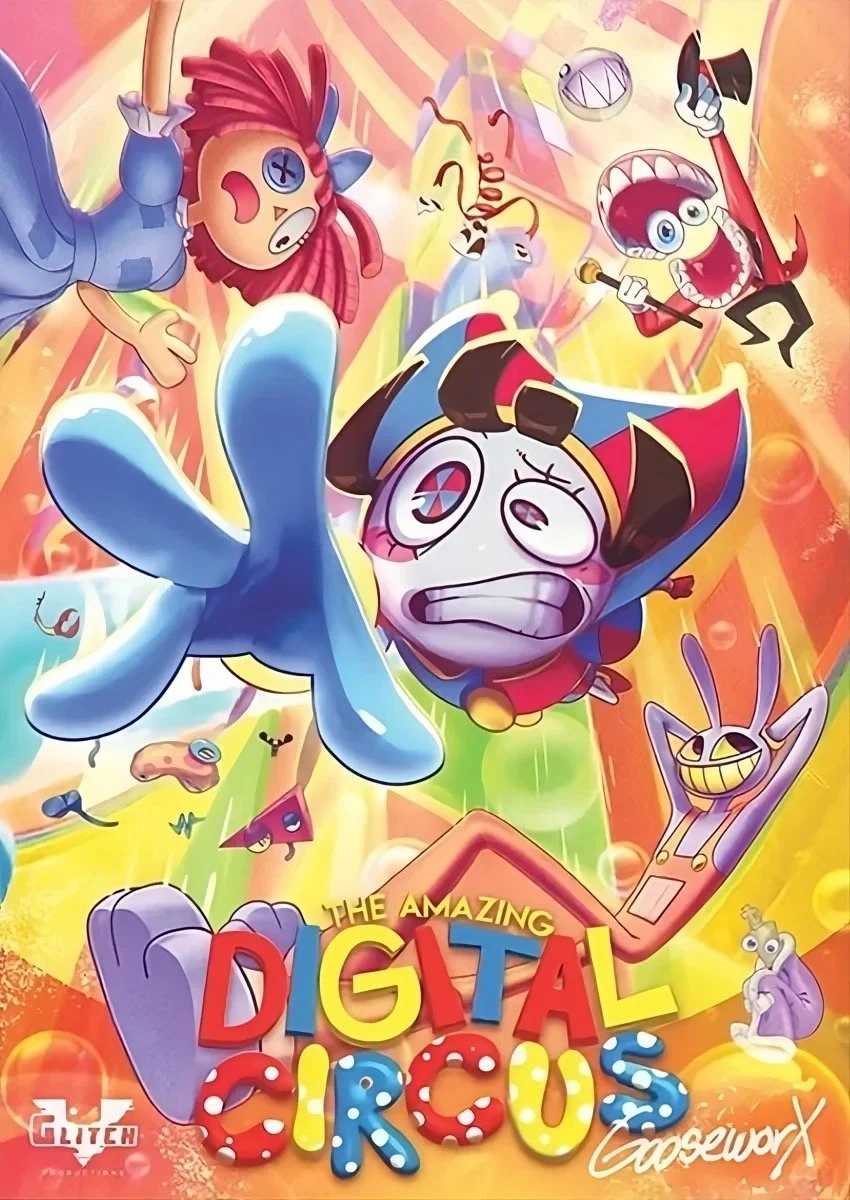
After nearly three years, one of the most popular series on YouTube is coming to a close and leaving behind an incredibly successful legacy: The Amazing Digital Circus. With over 1.2 billion collective views on YouTube across all the episodes and nearly 40 million dollars at the global box office, this colorful animated comedy has become a sensation of the highest degree. So as the series comes to a close, let’s take a look back at what made the series so high-quality, so thought-provoking, and so boundary-breaking in the broader space of entertainment.
Created by American animator Gooseworx and the Australian animation studio Glitch Productions, The Amazing Digital Circus is a dark comedy set in a virtual reality world. It follows six humans who, at certain points in their lives, put on a headset that transports them to the Circus. Losing their old names and gaining new bodies, they now have to build a new life in this crazy Circus world. Their only company are each other and Caine: the unpredictable AI ringmaster who creates “adventures” to occupy the occupants' time and appease his own desires for praise.
Firstly, this show would not be what it is, or exist at all, without Glitch Productions. Founded in 2017 by Kevin and Luke Lerdwichagul, Glitch has been at the vanguard of a boom in independent animation over the last five years. During the streaming era, increased belt-tightening and algorithm chasing have led streamers and networks to focus primarily on either animated series for kids, like Bluey, or for adults like Family Guy and The Simpsons. Glitch’s mission is to bridge that gap, creating high-quality animated content that can be enjoyed by all ages, yet still explores deeper and more profound themes than other shows.
And now to speak on the show itself, The Amazing Digital Circus is absolutely the kind of high-quality programming that speaks to Gltich’s central desire. On the surface, it spits in the face of all the things that the modern studio system avoids. It’s a completely original idea, not based on any IP. It features no big-name stars, instead a group of lesser-known voice actors. But despite all that, it’s able to thrive by focusing on story, characters, and psychology in ways that hit on a deeper, more profound level than a lot of other shows I’ve watched in the last year.
Each of the six characters we meet across the series is so interesting, with different ways of looking at the world and psychological problems that the writing doesn’t hesitate to explore. This is especially true with what I would consider the two central characters of thenarrative: Pomni, an empathetic jester, and Jax, a sarcastic and guarded rabbit. Even when other characters are the focal point of episodes, these two are always central to the narrative.
Jax in particular gets more development than any other character in the series, as we learn about his complicated past, struggles with identity, and how he masks his feelings with cruelty. I won’t go too much into what happens in the final episode in case people haven’t been able to watch it, but I will definitely heap praises upon Lizzie Freeman and Michael Kovach for their vocal performances in that episode and across the season as a whole. This isn’t to take away from any of the other characters, as I genuinely think there is no weak link among the cast. Probably my personal favorite is Caine, who, despite being an AI, is an incredibly interesting character superbly performed by Alex Rochon. I could never get enough of his comedic timing and how he’s able to seamlessly switch from being a funny and harmless ringmaster to a terrifying entity.
Other aspects of this show that I absolutely think deserve respect are its pacing and writing. This is one of the best-paced shows I’ve watched in a while: every scene is important, and nothing is filler. This is partially due to the independent nature of the production: they simply don’t have the budget for an extended season. But in the modern TV landscape, where eight-episode seasons either feel too rushed or too slow, the fact that a web series with just 9 episodes, averaging about 30 minutes each, can thread that needle is a miracle.
And finally, the writing of the series is so well-done. I’ve already touched on how the script is not afraid to explore more complicated characters and psychological issues. But what’s even more impressive is how human every character feels. In a lot of ways, it felt like Marvel’s Guardians of the Galaxy films, where you have all these crazy characters with wild designs that are still grounded in relatable ways. The second episode of the series literally makes you cry over a gummy crocodile with an Australian accent, and that’s how you know the show is hitting on something special.
So as this series ends, it leaves behind a legacy that will hopefully inspire many others to follow in Gooseworx’s footsteps. Between its relatable characters, deep themes, and hilarious comedy, The Amazing Digital Circus will no doubt earn a well-earned place in animation history.