
Be Careful What You Wish For
The American Dream consists of climbing the ladder, “pulling yourself up by your bootstraps.", “putting your nose to the grindstone”. Stories like these, of people becoming successful are wonderful and often inspire people to do the same. It is a core belief in America that anyone can be anything. The consequences, however, are often dire. There is no way one can maintain the American Dream without being selfish, and films are a tool that reflects that to us. Getting to the top is one thing, but staying there, defeating the competition, keeping people below you, is another. To achieve the dream means to be able to look at someone else and know that you have more than them. To maintain success, to maintain the dream, is to perpetuate a class system that benefits only the wealthiest. Another part of the American Dream that isn’t often discussed, is the way it leaves people alone. We are not taught to bring others up, we have to have our own backs first, but where does that leave us in the end?
There is a loneliness epidemic in the US. In the 21st century, humans have become glued to their phones, sacrificing conversation with other people for hours-long doom scrolls. Many people would have you believe that this epidemic started recently, but I would argue that it is part of our ethos as Americans. There is a PBS article titled, “How The American Dream Convinced People Loneliness Is Normal” that explains this exact idea. It explains how individualism is ingrained in our American culture.
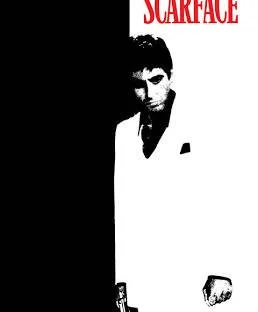
Gangster films are some of the best films to use to analyze the American Dream. Though the ordinary viewer doesn’t live the life of the gangster, they are attracted to them because they are outlaws who still have the same goals as the rest of us, but they aren’t afraid to talk about it. They aren’t afraid to say that they want money. There’s something messed up about the gangster that draws us in. The anti-hero– the guy we shouldn’t like, but we often do. Robert Warshow wrote the essay The Gangster as a Tragic Hero where he explains our innate attraction to the gangster, “the experience of the gangster as an experience of art is universal to Americans. There is almost nothing we understand better or react to more readily or with quicker intelligence... In ways that we do not easily or willingly define, the gangster speaks for us, expressing that part of the American psyche which rejects the qualities and the demands of modern life, which rejects ‘Americanism’ itself” (Warshow 4). The gangster is a complex character, as we root for him, but also gladly accept his demise because we know his tactics are wrong. However, this character is a rebel and appeals to us because it rejects our presupposed views on society while also confronting society in a way that we are too afraid to.
The tragedy of the gangster is how they are left. Warshow writes about how in films, the gangster climbs ranks steadily until his inevitable downfall . Citing Scarface, he writes about the end of the film:
Through some monstrous lack of caution, he permits himself to be alone for a few moments. We understand from this immediately that he is about to be killed. No convention of the gangster film is more strongly established than this: it is dangerous to be alone. And yet the very conditions of success make it impossible not to be alone, for success is always the establishment of an individual preeminence that must be
imposed on others, in whom it automatically arouses hatred; the successful man is an outlaw. (Warshow 6)
This section of his piece is the key to why the gangster film is such a useful tool in analyzing the American Dream and its consequences– the gangster always ends up alone, and in some cases, dead. The gangster, once surrounded by comrades and fellow hustlers, achieves success and is left to wander the shadows, but as I stated before, in order to achieve and maintain the dream, he has to be able to compare his successes to others and have more than them, often by being corrupted, leaving him alone.
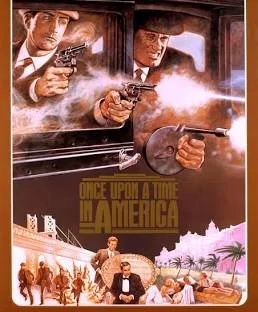
In Once Upon A Time In America, the film focuses on David “Noodles,” Max, and their gang. They start out as a team, but soon fall apart as Max falls victim to corruption, like Tony Montana, and turns on Noodles. Noodles is a flawed character as well, but by the end of the film, seems to have changed for the better. He has no friends and no family. He had money with Max, but left his life of crime behind. Regardless, he is still a gangster, hiding in the shadows, and just as Warshow writes, his “conditions of success make it impossible not to be alone.” The film ends with him wandering away into the darkness of a wealthy Long Island neighborhood. Once Upon A Time In America, and all gangster films at that, depend on a team that inevitably falls apart, leaving at least one rich and alone.
This is why we are attracted to gangster films, because they reflect our American worldview back at us, but disguised as something foreign and unique that part of us hopes fails by the end. The American Dream is about maintenance and ending up alone. Once we succeed in the Dream, we become individuals. We are not taught to succeed together. In the PBS article, the writer explains that "loneliness" has been a word used in the US since the 19th century and asks the reader, “Do the contours of American society — that emphasis on individualism, that spreading out with impunity over a vast, sometimes outsized landscape — encourage isolation and alienation?” (Anthony). This question is answered in films about the American Dream, specifically films about outlaws. Perhaps it is easier to see with gangsters because in the end, they literally end up alone, but it is true with many other films.
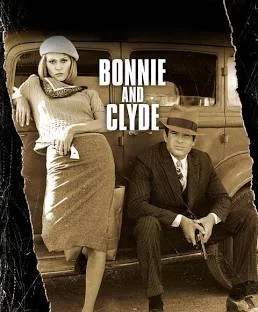
In Bonnie and Clyde, the aforementioned characters die together, side by side. Theirs is a story of love in a time of loss. While they don’t end up alone, they sacrifice their communities for their dream of wealth. Similarly to the gangster films, they become greedy with their successes. They continue to rob people because it works for them. When they visit Bonnie’s family, Clyde talks about the real dream, to settle down and have a house with Bonnie near her mother. Due to their lifestyle choices, however, Bonnie’s mother tells her that they can’t ever see each other again because they chose a life that is public and that would keep them on the run forever. Bonnie falls into a depression, and at this point, the outlaw ends up alone in some way– thrust from her community, and knows that things will never be the same.
It would be easy to say that the American Dream’s consequences are corruption, and that is true as well, there is a real loss of humanity. Movies about outlaws and gangsters do a fantastic job of portraying that because in order to rise up, they need each other, they need a team. Once they are corrupted by wealth, they have to be alone. This goes for all of us. From our first days in school, we are socialized to compete with one another, to get the best grade, or be the best athlete. Nowadays, we compete for likes, follows, and comments– literally monetizing appreciation for one another. This is America. But America is also filled with communities who build each other up. Look at any grass roots organization, like UPROSE in Brooklyn, one of the oldest Latino organizations focused on climate justice and working class communities’ health. Even Los Angeles after the fires last year; the whole city came together in whatever way they could to help people who lost their homes and were affected by the fires. The American Dream is about success, which in turn often means wealth. It’s a ladder that is made to be climbed alone, but so much can be done when people band together. That is why gangster movies hit us where it hurts, because they show us that we need each other, but when we inevitably fall victim to greed and individualism, we end up alone.
Works Cited
Anthony, Ted. “How the American Dream convinced people loneliness is normal.” PBS, 16 May 2023, https://www.pbs.org/newshour/amp/nation/how-the-american-dream-convinced-people-loneliness-is-normal. Accessed 2 December 2025.
“UPROSE Projects: Driving Action for Environmental Justice.” UPROSE, https://www.uprose.org/our-work/projects/. Accessed 2 December 2025.
Warshow, Robert. “Robert Warshow: The Gangster As Tragic Hero.” Scraps from the loft, 14 July 2020, https://scrapsfromtheloft.com/movies/robert-warshow-the-gangster-as-tragic-hero/. Accessed 2 December 2025.