
Punk Is Not Just A Genre
I wrote this a while back for a class I was in. I really wanted to examine what “punk” is. It’s an aesthetic, it’s a genre, it’s a lifestyle.
In 1977, Lester Bangs said, “At its best new wave/punk represents a fundamental and age-old Utopian dream: that if you give people the license to be as outrageous as they want in absolutely any fashion they can dream up, they'll be creative about it, and do something good” (Carr). This idea has brought me to think about what punk is– what it means now– or what it has always been. In thinking about writing this piece, I was trying to figure out what punk means today. Is it a dying genre? Is it merely a product of its time– a response to hippie culture in the sixties– or is it something that can be molded over time into something new? Is it a genre, or can it be a belief? The goal is to chart the history of punk and post-punk to see what the tie is. Is punk more than just a genre– can it also be an ideology?
Throughout this piece, be aware that there is a distinction between “punk” in comparison to “punk rock” as a genre. They often overlap, but the point of this piece is to explore punk as a greater inspiration and lifestyle. It is also important to clarify that punk history is far-reaching and this essay will not cover all of it or all of the artists who may have a punk influence now, but the aim is to discuss many.
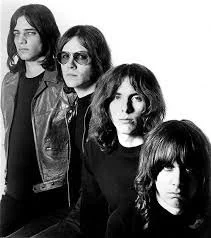
In the exploration into punk music, I had to go back in time and start with early punk in the late sixties and early seventies. What did punk mean then? It was a response to hippie culture in the 1960’s and 1970’s. While there is debate on what band was the first punk band, many would say that The Stooges were the first punk band. This is credited to Iggy Pop’s demeanor onstage and his willingness to push the boundaries of live performance. He challenged the ideas of what the Beatles’ rock music was. For him, it wasn’t just about performing onstage, but pushing against the constraints of what a rock band was supposed to be. He was often shirtless and wearing tight clothes. He wore makeup, which in that time, was not a socially acceptable practice for men. He mingled with the audience in unusual ways– stage diving wasn’t popular yet until he started doing it.
Iggy Pop is a starting point into my exploration of punk music and what it means to us today. He shows that while it may not sound exactly like what we now expect punk rock to sound like, The Stooges still are seen as one of the first successful punk bands because of Iggy Pop’s dedication to his live performances. He challenged the ideas of what live show experiences were supposed to be, and pushed against it. It is inherently punk. So, again, I ask, is punk a genre or an ideology?
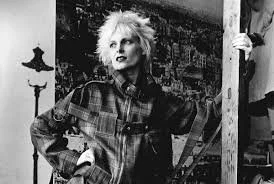
I wouldn’t be acknowledging punk if I didn’t mention The Ramones, The Clash, and Sex Pistols. The Ramones were a massive influence to punk merely because of their aggressive sound, and their lyrical simplicity. They showed that music didn’t need to have a clean-cut aesthetic. They made it clear that you didn’t have to know how to play instruments in the classic way. The Clash made music that responded to the ongoing political problems in the UK. They used music to voice their opinions. Sex Pistols, with the help of designer Vivienne Westwood, created the punk look and aesthetic by designing and wearing clothes that are scandalous and not in fashion. Westwood continued this in her designs. While they became more refined– less of a dependency on bondage– her designs continued to play with avant-garde and asymmetrical styles that push against the conventions of mainstream fashion.
Into the late-seventies and early-mid eighties, I think of Bad Brains who solidified themselves as pioneers of hardcore punk. As a band, they influenced punk culture and also showed how genres could mix. Forming in the mid-seventies, they are generally the most well-known black punk band in their time, which in itself, is pretty punk (by Bangs’ definition).

Further, Fugazi had their own version of punk that ties back into an anti-establishment belief. They didn’t make merch. They kept their ticket prices very low. They adopted Minor Threat’s term “straight edge” meaning that they did not drink, take any substances, or have casual sex. It goes against the saying that often accompanies rock music, “sex, drugs, and rock n’ roll.” They did things differently. Just like how early punk was a response to hippie culture, Fugazi and bands like it– post-hardcore punk– were a response to prog rock and massive shows that made a lot of money off of its audiences.
Bikini Kill is a 90’s punk band that deserves an acknowledgement. (Kathleen Hanna is a huge inspiration to me). They stood up against the patriarchy and wrote fanzines to educate and also let people know about their upcoming performances. Their music, like the Ramones, is very straightforward and does little beating around the bush. They had a message and were adamant about getting it out.
Rage Against the Machine is also a punk band that also combines rap and punk to create a strong political message. They are very much “punk” but they are much after the initial wave of punk rock. The fact that they are still punk shows that punk isn’t only a response to hippie culture, but just a response to the given status quo.
By examining the “golden years” of punk rock, I can get more of an idea of what the punk ideals are. They differ between bands, but they come together in an ideological stance. Punk, as previously stated, was originally a response to the hippie culture of the 60’s and 70’s. Over time, the attributes of punk became in how it was portrayed. It was all in a presence or a look. Punk does have a sound, but the sound varies. Punk can be an adjective. There isn’t one meaning, but I would say it means unconventional. A punk person is someone who challenges the status quo– this could be political, or in the music industry. It makes me think that punk wasn’t just a product of its era, and like Rage Against the Machine, the punk genre can bend. Is punk a singular sound? Can it only be rock? Does punk adapt with the changing times, or is it stuck in the past?
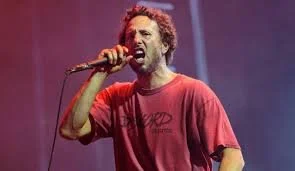
Punk is an ideology. It can come in the form of an artist who does things differently. Punk can be a response to the political climate or a social issue. It can also just be the way that an artist creates. For example, Run The Jewels is a hip-hop/ rap duo that comments heavily on racism in the US. It was very prevalent on their album RTJ4 that was released in 2020. A lot of it felt like a direct response to the ongoing police brutality and coincided well with the Black Lives Matter protests even though they had made it before 2020. They also had Zack De La Rocha of Rage Against The Machine on one of the tracks. The album specifically has a punk energy to it because they use their music as a response as well as incorporate a little bit of the punk genre (loud and aggressive).
Now, people can be in classic punk-style bands and be punk even if their response isn’t necessarily to hippie culture anymore. Destroy Boys comes to mind. In many of their songs, they write more about personal problems and the lifestyle that they live. They fit the punk music genre but they also fit the ideology. They write simple songs that are relatively uncomplicated and loud. That in itself is punk.
Many of the bands referenced above have the classic punk sound and ideology. Many of them, however, are in the past. It is important to explore what kind of artists can be punk without the genre, and if that is even possible. If we go back to some early punk, and how they worked on simplicity without the frills of big studios and major labels, we can see some artists today who have established themselves that way.

There are a lot of small indie artists in the “bedroom pop” genre that come to mind when I think of the punk ideology. Cautious Clay, Clairo, and Beabadoobee are “self-made” and are just examples of artists who (at least in their early years) produced music on their own, in their homes. “Bedroom Pop” might sound like the exact opposite of punk, but the trailblazers of the genre that came into the public consciousness around 2018, were doing something different than other small artists. They embraced a lo-fi sound that was full of imperfections. To this day, while they often work with collaborators, they still produce a lot of the music on their own– avoiding the major production studios. Now, however, many of them have been indoctrinated into the major label system.
There is also Melanie Faye, who is self-produced, doesn’t work with a label, and doesn’t have a manager. She doesn’t believe in the industry professionals. She believes that she can run her own business, and that she shouldn’t have to share her earnings with someone who can’t help her more than she can help herself.
While some of the “bedroom pop” artists lack the sound that makes the punk sound, they have embraced not knowing how to play and teaching themselves, like the Ramones or Kim Gordon. They have taught themselves how to produce and have leaned into a 90’s reminiscent sound. They have embraced a punk idea: to be creative in an outrageous way that goes against expectations.
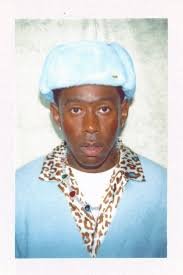
Aside from “bedroom pop,” some rap artists have also developed a punk style. Tyler, The Creator is an example of abstract rap. He has always worked to pave his own way in the music industry. He is unafraid to make crude jokes in his songs. He is loud and his deep voice is a strong presence. His music has a lot of punk attributes.
Punk didn’t die in the early aughts. It has been reinventing itself over and over again. Lester Bangs was right that punk is “outrageous” and “creative.” It is a way to express creativity that differs from what the world expects of modern artists and, specifically, musicians. Creating when the odds are against you is punk. Punk rock still exists as its own genre, but the idea of punk is far greater than the genre itself. Whether it be in the way they make music, what their music is about, or their sound, the ideology of punk has lived on and will continue to.
Works Cited
Berman, Judy. “How Iggy and the Stooges Invented Punk.” Pitchfork, 4 October 2016, https://pitchfork.com/thepitch/1312-how-iggy-and-the-stooges-invented-punk/. Accessed 12 November 2024.
Carr, Eric. “Various Artists: No Thanks!: The 70s Punk Rebellion.” Pitchfork, 10 February 2004, https://pitchfork.com/reviews/albums/1969-no-thanks-the-70s-punk-rebellion/. Accessed 12 November 2024.
Mclaughlan, Scott. “Did the Ramones Invent Punk?” TheCollector, 18 December 2023, https://www.thecollector.com/did-the-ramones-invent-punk/. Accessed 12 November 2024.
Pop, Iggy, and Sebastian Patiño. “Iggy & The Stooges - Raw Power: First Live Show.” YouTube, 27 April 2015, https://www.youtube.com/watch?v=cAsOC8KwJFc. Accessed 12 November 2024.
Robbins, Ira. “The Clash.” Rock & Roll Hall of Fame, https://rockhall.com/inductees/clash/. Accessed 12 November 2024.